



North American P-51D Mustang
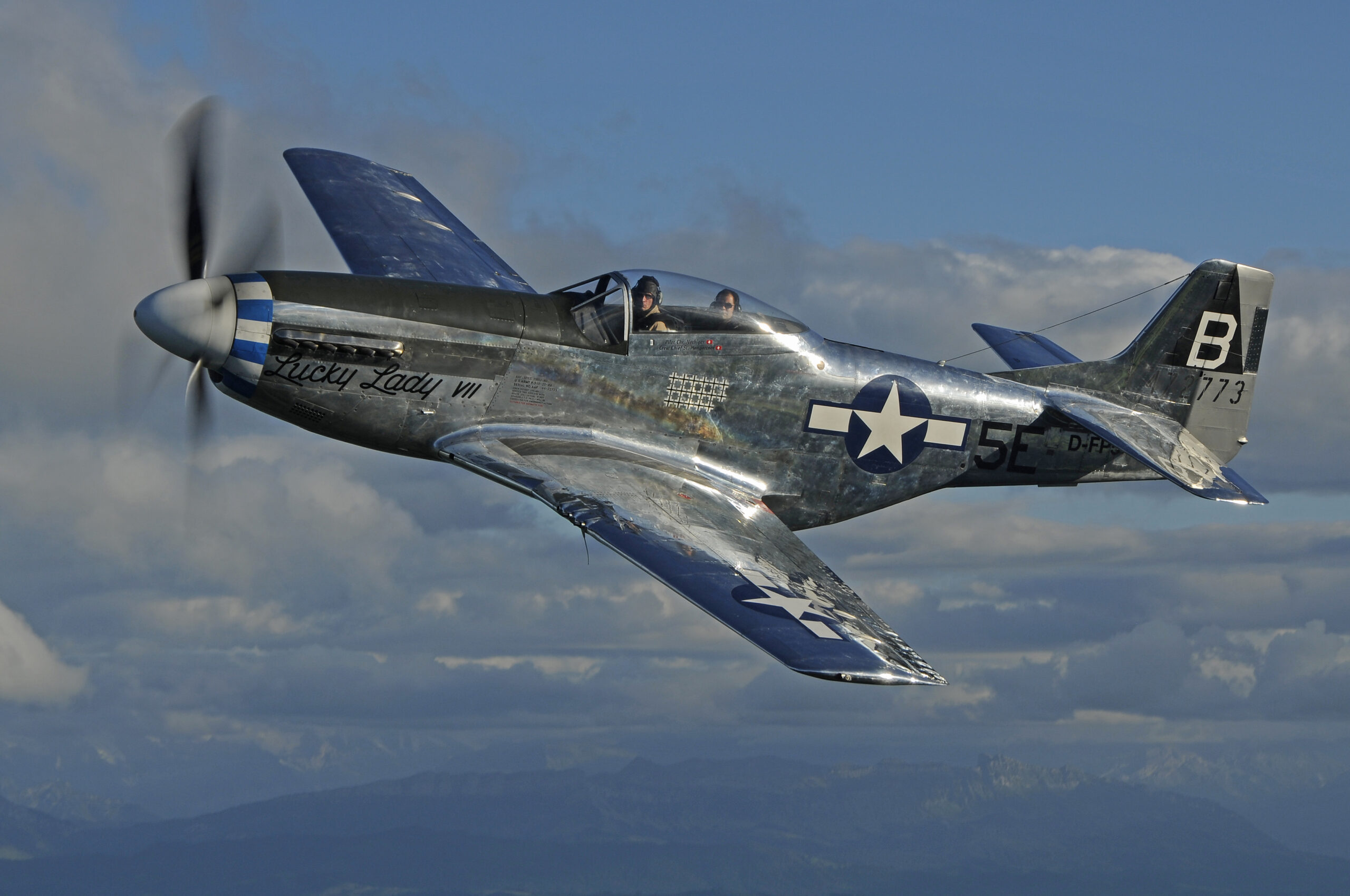
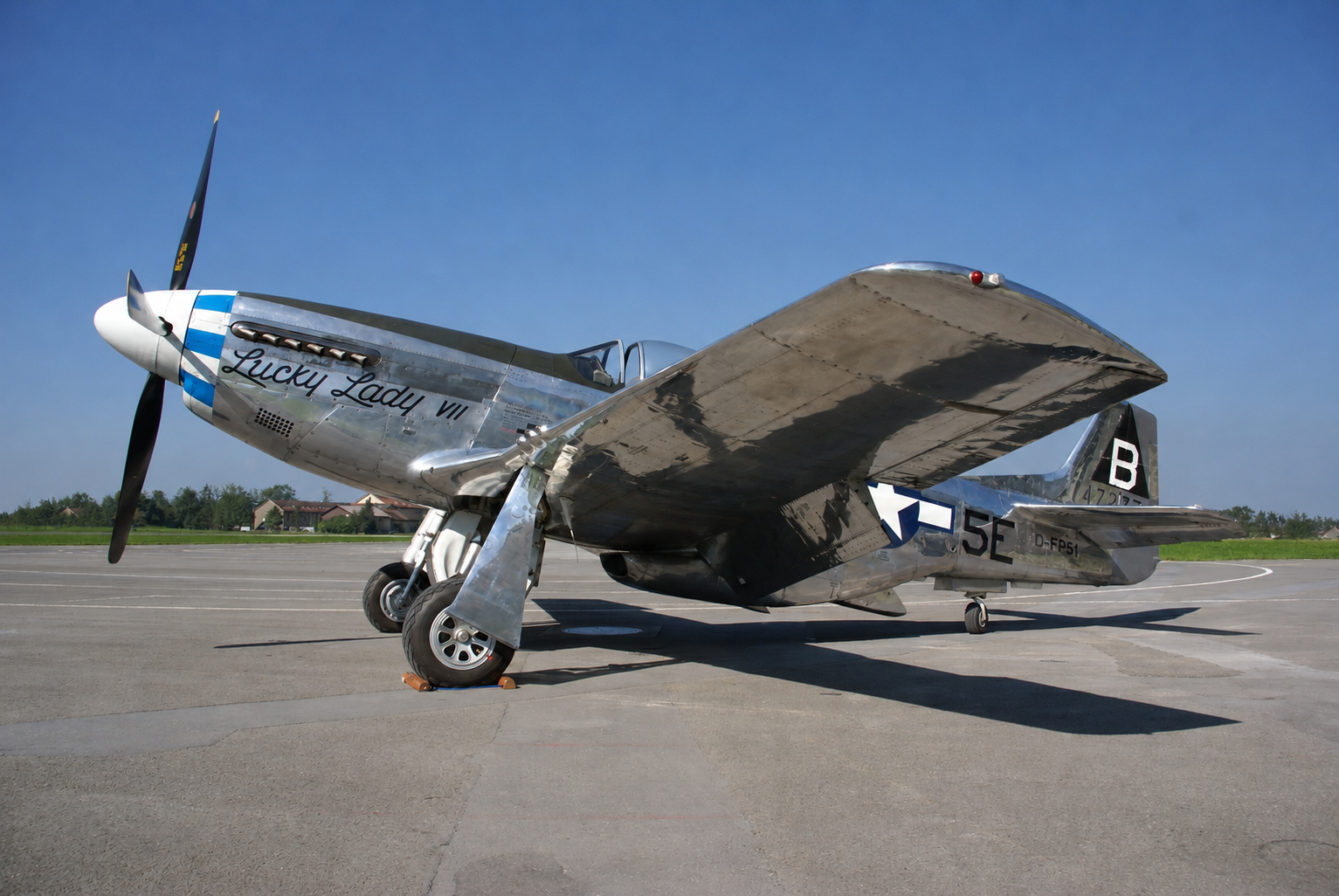
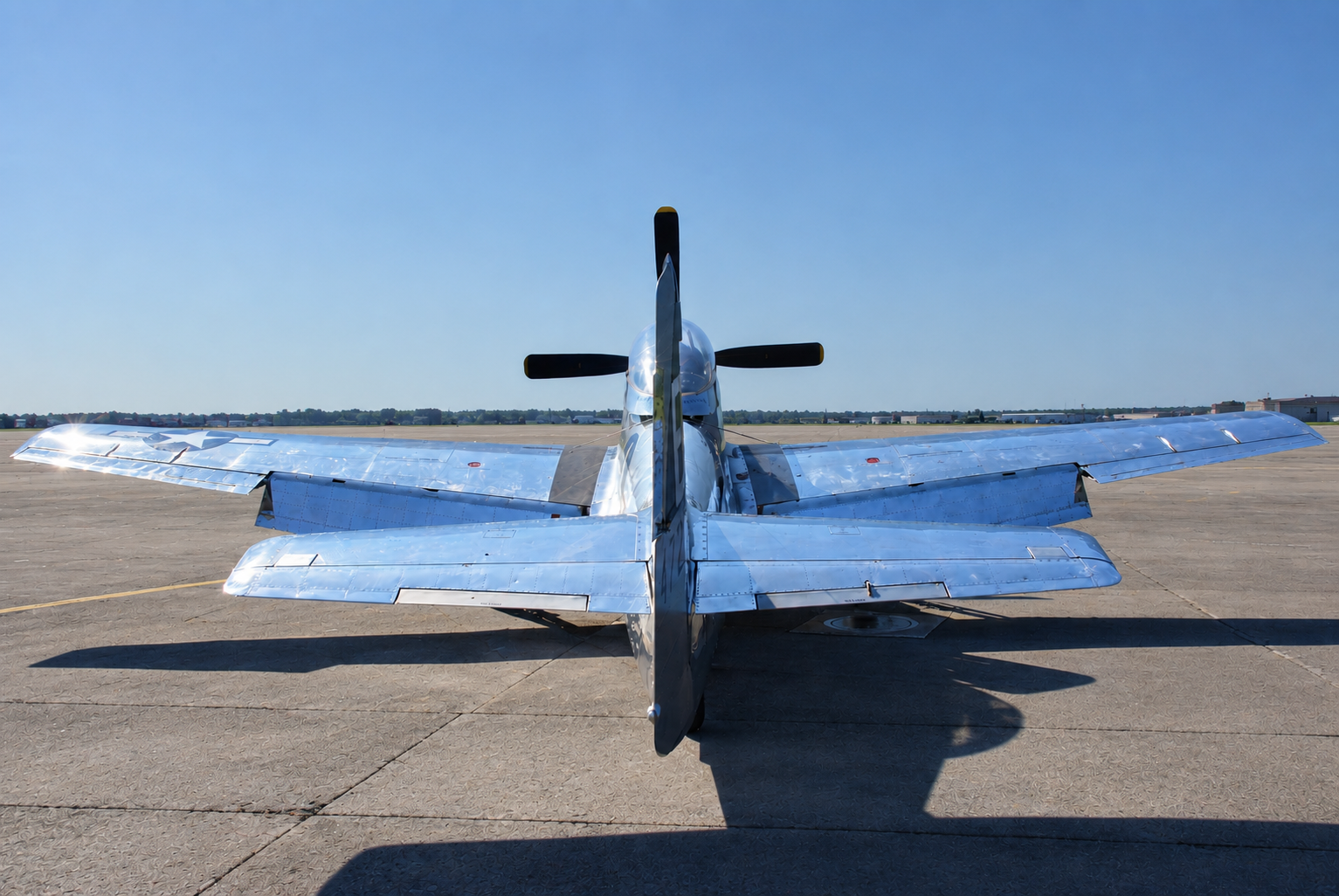
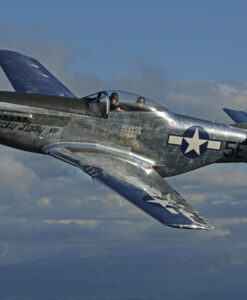
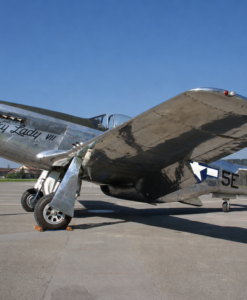
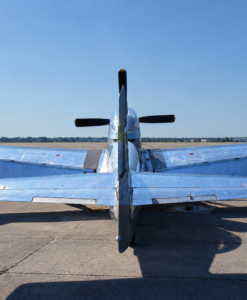
An aircraft that has been inspiring dreams for generations: With its elegant lines, exceptional performance and the unmistakable sound of the V12 Merlin engine, the P-51D Mustang is one of the most legendary fighter aircraft of the Second World War.
A flight in the Mustang is far more than an ordinary flight. From Plzeň-Líně airfield, you follow in the footsteps of the pilots who made aviation history with the Mustang. You'll experience the power, speed, and agility of this legendary fighter jet firsthand and witness a rare moment where history comes alive.
You will be accompanied by a highly qualified team of experienced pilots and flight instructors with extensive experience on historic warbirds. Whether you are an aviation enthusiast or looking for an unforgettable adventure, this flight combines the fascination of the past with memories that will last a lifetime.
Flight characteristics of the P-51D Mustang
5 reasons to book your Mustang flight in Pilsen
Flying in a true legend
The North American P-51D Mustang is one of the most famous and capable fighter aircraft of World War II. Deployed as a fast, agile long-range fighter, it escorted Allied bombers deep into enemy territory. Its aerodynamic lines, powerful V12 Merlin engine, and exceptional range made it one of the most influential combat aircraft of its time. Climb aboard and experience the power, speed, and history of this aviation legend firsthand!
Powerful sound & warbird feeling
The unmistakable sound of the V12 Merlin engine, the palpable power during acceleration, and the direct response to every steering input: In the P-51D Mustang, you experience the fascination of a legendary high-performance fighter with all your senses.
You decide how wild it gets
From impressive sightseeing flights to dynamic flight maneuvers such as loops or rolls, the experience can be individually tailored to your wishes and the respective flight conditions.
Breathtaking scenery
The flight departs from Plzeň-Líně, offering breathtaking views of the Southwest Bohemian landscape. You'll fly over a region where P-51 Mustangs escorted bomber formations and attacked German transport routes towards the end of World War II. This makes the flight not only an impressive experience but also a journey back in time.
Personal care & unforgettable memories
Experienced pilots, personalized arrangements, and genuine passion make your flight not only safe and personal, but also an impressive encounter with the history of the P-51 Mustang. Every minute on board brings to life the fascination of one of the most famous fighter planes of World War II.
The North American P-51D Mustang is one of the most famous and capable fighter aircraft of World War II. Deployed as a fast, agile long-range fighter, it escorted Allied bombers deep into enemy territory. Its aerodynamic lines, powerful V12 Merlin engine, and exceptional range made it one of the most influential combat aircraft of its time. Climb aboard and experience the power, speed, and history of this aviation legend firsthand!
The unmistakable sound of the V12 Merlin engine, the palpable power during acceleration, and the direct response to every steering input: In the P-51D Mustang, you experience the fascination of a legendary high-performance fighter with all your senses.
From impressive sightseeing flights to dynamic flight maneuvers such as loops or rolls, the experience can be individually tailored to your wishes and the respective flight conditions.
The flight departs from Plzeň-Líně, offering breathtaking views of the Southwest Bohemian landscape. You'll fly over a region where P-51 Mustangs escorted bomber formations and attacked German transport routes towards the end of World War II. This makes the flight not only an impressive experience but also a journey back in time.
Experienced pilots, personalized arrangements, and genuine passion make your flight not only safe and personal, but also an impressive encounter with the history of the P-51 Mustang. Every minute on board brings to life the fascination of one of the most famous fighter planes of World War II.
Customer voice

The sound of the engine is simply amazing! It was a lot of fun.
Questions & Answers about the Mustang Flight
When do flights take place?
Mustang flights take place from April to October and by individual arrangement. The start of the season depends on the completion of the annual inspection. Unfortunately, no flights are possible during the winter months.
Where are we flying to?
Depending on the chosen flight duration, the route around Plzeň-Líně leads over the diverse landscape of West Bohemia. The 30-minute panoramic flight allows for some customization of the route, while the 40-minute Maximum Mustang Experience offers the greatest range.
What is the process?
You will first be greeted by the experienced team at Plzeň-Líně airfield and get a close look at the impressive P-51D. Afterwards, you will receive a detailed briefing, create your personal flight program, and learn more about the history of the Mustang and its role in World War II. Then you will be prepared for the flight. Once the Merlin engine is warmed up, you will take to the air. After landing, there will be time for photos, conversation with the pilot, and a relaxing end to the day.
How long does it take in total?
Plan on spending three hours to half a day for the entire experience. Besides the briefing, flight preparation, and the actual Mustang flight, there will be plenty of time for photos and conversations with the pilot. You can also visit the museum with its collection of historic aircraft.
Is aerobatics performed with the Mustang?
Depending on the chosen flight duration, simple aerobatic maneuvers such as rolls and loops are also possible. Your highly experienced Mustang pilot will create a customized flight program, taking your wishes into account and ensuring that your flight in the P-51D becomes an unforgettable experience.
Can friends or family come to the airfield?
Of course! Your companions are very welcome at the airfield and can witness the flight preparation, briefing, takeoff, and landing. During your Mustang flight, they can visit the historic aircraft collection or simply relax at the airfield and watch the action.
Can I take photos or videos?
Photos and videos may be taken free of charge before and after the flight. A GoPro in the cockpit is also possible upon request.
Who is my pilot?
The flights are operated by Stephen Stead and other highly qualified pilots with extensive experience on historic, high-performance aircraft. Stephen Stead is an experienced British warbird pilot and owner of the P-51D. Previously, he owned and operated a Spitfire Mk XVI at Plzeň-Líně airfield for approximately ten years.
All pilots employed are appropriately qualified and thoroughly familiar with the Mustang's specific requirements. They tailor the flight program to the chosen flight duration, weather conditions, and your personal preferences.
What is the story behind the Mustang?
The P-51D was built in 1945 at the North American plant in Dallas. It arrived too late for combat service in World War II. Later, it was acquired by the Royal New Zealand Air Force and first flew in 1951. After being decommissioned, the aircraft remained in storage for decades before undergoing a comprehensive restoration and conversion to a two-seat Mustang, beginning in 2004. It has been flying again since 2009 and is currently operated by Stephen Stead at Plzeň-Líně Airfield.
The P-51 Mustang decisively changed the air war over Europe. Thanks to its high speed, maneuverability, and exceptional range, it could escort Allied bombers deep into enemy territory and back again. The P-51D thus became one of the best-known and most successful fighter aircraft of World War II.
Can I learn more about the North American P-51D Mustang?
The North American P-51 Mustang is one of the most famous fighter aircraft of World War II. Its prototype made its maiden flight in 1940. The later combination of an aerodynamically advanced airframe and the liquid-cooled V12 Merlin engine made the Mustang an exceptionally fast, agile, and long-range fighter.
The P-51 became particularly well-known as a long-range escort fighter. It could escort Allied bomber formations deep into enemy territory and protect them from enemy fighters for a large part of their mission. As a result, it played a significant role in the air war over Europe. The distinctive P-51D, with its teardrop-shaped canopy, also offered the pilot significantly improved all-around visibility.
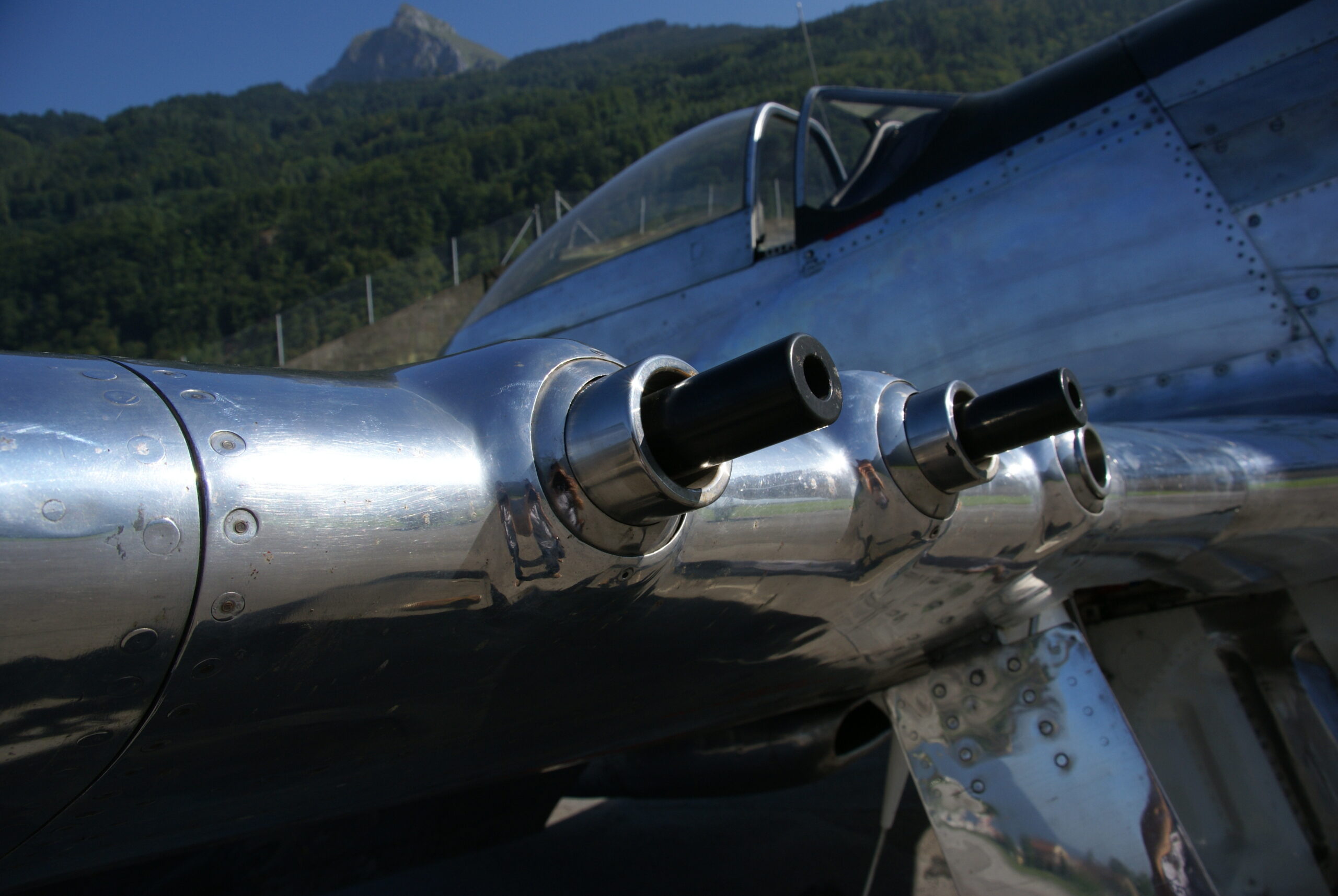
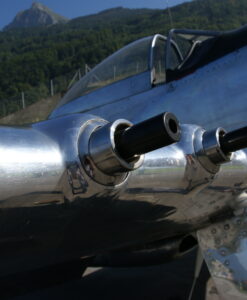
The P-51D was powered by a license-built Packard Merlin V12 engine producing approximately 1,700 hp. Its top speed, depending on the variant and operational conditions, was around 700 km/h. It was originally armed with six .50 caliber heavy machine guns. It could also carry bombs, rockets, and external fuel tanks.
Operating the aircraft also demanded a great deal from the pilot. Landing gear, flaps, propeller pitch, engine cooling, and fuel mixture had to be constantly monitored and coordinated. At the same time, the Mustang possessed comparatively harmonious flight characteristics and high performance. It is precisely this combination of technology, speed, and history that makes flying the P-51D a unique experience even today.
What's the story behind this Mustang?
The P-51D-30-NT Mustang, serial number 45-11495, was built in 1945 at the North American plant in Dallas. It arrived too late for service in World War II. Subsequently, it was acquired by the Royal New Zealand Air Force and first flew there in 1951. After being retired from service, the aircraft remained in storage for many years.
In 2004, American entrepreneur Bob Baker took over the restoration project. The Mustang was extensively rebuilt and fitted with a second seat, enabling passenger flights. It returned to the air in 2009 under the registration N5551D. Today, it belongs to British warbird pilot Stephen Stead and is based at Plzeň-Líně airfield.
Buck Pattillo flew the original P-51D together with his twin brother Bill as part of the famous 352nd Fighter Group. Buck achieved six confirmed aerial victories against German aircraft and was awarded the Distinguished Flying Cross and the Air Medal with two Oak Leaf Clusters for his service.
We are proud to offer this historic aircraft for passenger flights. Depending on the chosen flight duration and the prevailing conditions, basic aerobatic maneuvers such as rolls and loops are also possible.
Tell me more about the manufacturer North American Aviation.
North American Aviation, or NAA for short, was one of the most important American aerospace companies of the 20th century. Founded in 1928, the company shaped both military aviation and manned spaceflight for several decades. Few manufacturers developed a comparably broad range of successful training aircraft, fighter jets, bombers, experimental aircraft, rocket stages, and spacecraft.
During World War II, North American Aviation became particularly well-known for the T-6 Texan, the B-25 Mitchell, and the P-51 Mustang. The T-6 served in numerous countries as an advanced trainer, preparing pilots for high-performance fighter aircraft. The twin-engine B-25 Mitchell was used as a versatile medium bomber. With the P-51 Mustang, North American finally created one of the most famous fighter aircraft in aviation history. Its high speed, long range, and excellent handling characteristics made it a crucial long-range escort fighter over Europe.
After the war, North American Aviation continued its success story in the jet age. The F-86 Sabre became one of the best-known Western fighter aircraft of the early postwar period and gained particular prominence during the Korean War. With the XB-70 Valkyrie, the company also developed a futuristic experimental and bomber prototype designed for speeds of around Mach 3.
North American Aviation also played a central role in the exploration of high-speed flight. The rocket-powered experimental aircraft X-15 reached speeds of up to Mach 6.7 and altitudes at the edge of space. The knowledge gained from the X-15 regarding aerodynamics, control, heat shielding, and atmospheric reentry significantly influenced later American space programs.
In the 1960s, North American Aviation became one of the most important industrial partners of the Apollo program. The company developed and built the Apollo Command and Service Module, in which the astronauts traveled to the moon and back to Earth. The second stage of the massive Saturn V moon rocket was also manufactured in a North American plant.
Following the merger with Rockwell-Standard in 1967, North American Rockwell was formed, later becoming Rockwell International. Under this corporate structure, the strategic swing-wing bomber B-1 Lancer and the Space Shuttle orbiter were among the aircraft developed and built. Rockwell's aerospace division was acquired by Boeing in 1996. As a result, North American Aviation's technological legacy lives on today as part of Boeing's corporate history.
The P-51D is therefore not only a legendary aircraft of the Second World War, but also a flying testament to a manufacturer whose developments helped shape the path from propeller aircraft to manned spaceflight.
Mustang flights take place from April to October and by individual arrangement. The start of the season depends on the completion of the annual inspection. Unfortunately, no flights are possible during the winter months.
Depending on the chosen flight duration, the route around Plzeň-Líně leads over the diverse landscape of West Bohemia. The 30-minute panoramic flight allows for some customization of the route, while the 40-minute Maximum Mustang Experience offers the greatest range.
You will first be greeted by the experienced team at Plzeň-Líně airfield and get a close look at the impressive P-51D. Afterwards, you will receive a detailed briefing, create your personal flight program, and learn more about the history of the Mustang and its role in World War II. Then you will be prepared for the flight. Once the Merlin engine is warmed up, you will take to the air. After landing, there will be time for photos, conversation with the pilot, and a relaxing end to the day.
Plan on spending three hours to half a day for the entire experience. Besides the briefing, flight preparation, and the actual Mustang flight, there will be plenty of time for photos and conversations with the pilot. You can also visit the museum with its collection of historic aircraft.
Depending on the chosen flight duration, simple aerobatic maneuvers such as rolls and loops are also possible. Your highly experienced Mustang pilot will create a customized flight program, taking your wishes into account and ensuring that your flight in the P-51D becomes an unforgettable experience.
Of course! Your companions are very welcome at the airfield and can witness the flight preparation, briefing, takeoff, and landing. During your Mustang flight, they can visit the historic aircraft collection or simply relax at the airfield and watch the action.
Photos and videos may be taken free of charge before and after the flight. A GoPro in the cockpit is also possible upon request.
The flights are operated by Stephen Stead and other highly qualified pilots with extensive experience on historic, high-performance aircraft. Stephen Stead is an experienced British warbird pilot and owner of the P-51D. Previously, he owned and operated a Spitfire Mk XVI at Plzeň-Líně airfield for approximately ten years.
All pilots employed are appropriately qualified and thoroughly familiar with the Mustang's specific requirements. They tailor the flight program to the chosen flight duration, weather conditions, and your personal preferences.
The P-51D was built in 1945 at the North American plant in Dallas. It arrived too late for combat service in World War II. Later, it was acquired by the Royal New Zealand Air Force and first flew in 1951. After being decommissioned, the aircraft remained in storage for decades before undergoing a comprehensive restoration and conversion to a two-seat Mustang, beginning in 2004. It has been flying again since 2009 and is currently operated by Stephen Stead at Plzeň-Líně Airfield.
The P-51 Mustang decisively changed the air war over Europe. Thanks to its high speed, maneuverability, and exceptional range, it could escort Allied bombers deep into enemy territory and back again. The P-51D thus became one of the best-known and most successful fighter aircraft of World War II.
The North American P-51 Mustang is one of the most famous fighter aircraft of World War II. Its prototype made its maiden flight in 1940. The later combination of an aerodynamically advanced airframe and the liquid-cooled V12 Merlin engine made the Mustang an exceptionally fast, agile, and long-range fighter.
The P-51 became particularly well-known as a long-range escort fighter. It could escort Allied bomber formations deep into enemy territory and protect them from enemy fighters for a large part of their mission. As a result, it played a significant role in the air war over Europe. The distinctive P-51D, with its teardrop-shaped canopy, also offered the pilot significantly improved all-around visibility.
The P-51D was powered by a license-built Packard Merlin V12 engine producing approximately 1,700 hp. Its top speed, depending on the variant and operational conditions, was around 700 km/h. It was originally armed with six .50 caliber heavy machine guns. It could also carry bombs, rockets, and external fuel tanks.
Operating the aircraft also demanded a great deal from the pilot. Landing gear, flaps, propeller pitch, engine cooling, and fuel mixture had to be constantly monitored and coordinated. At the same time, the Mustang possessed comparatively harmonious flight characteristics and high performance. It is precisely this combination of technology, speed, and history that makes flying the P-51D a unique experience even today.
The P-51D-30-NT Mustang, serial number 45-11495, was built in 1945 at the North American plant in Dallas. It arrived too late for service in World War II. Subsequently, it was acquired by the Royal New Zealand Air Force and first flew there in 1951. After being retired from service, the aircraft remained in storage for many years.
In 2004, American entrepreneur Bob Baker took over the restoration project. The Mustang was extensively rebuilt and fitted with a second seat, enabling passenger flights. It returned to the air in 2009 under the registration N5551D. Today, it belongs to British warbird pilot Stephen Stead and is based at Plzeň-Líně airfield.
Buck Pattillo flew the original P-51D together with his twin brother Bill as part of the famous 352nd Fighter Group. Buck achieved six confirmed aerial victories against German aircraft and was awarded the Distinguished Flying Cross and the Air Medal with two Oak Leaf Clusters for his service.
We are proud to offer this historic aircraft for passenger flights. Depending on the chosen flight duration and the prevailing conditions, basic aerobatic maneuvers such as rolls and loops are also possible.
North American Aviation, or NAA for short, was one of the most important American aerospace companies of the 20th century. Founded in 1928, the company shaped both military aviation and manned spaceflight for several decades. Few manufacturers developed a comparably broad range of successful training aircraft, fighter jets, bombers, experimental aircraft, rocket stages, and spacecraft.
During World War II, North American Aviation became particularly well-known for the T-6 Texan, the B-25 Mitchell, and the P-51 Mustang. The T-6 served in numerous countries as an advanced trainer, preparing pilots for high-performance fighter aircraft. The twin-engine B-25 Mitchell was used as a versatile medium bomber. With the P-51 Mustang, North American finally created one of the most famous fighter aircraft in aviation history. Its high speed, long range, and excellent handling characteristics made it a crucial long-range escort fighter over Europe.
After the war, North American Aviation continued its success story in the jet age. The F-86 Sabre became one of the best-known Western fighter aircraft of the early postwar period and gained particular prominence during the Korean War. With the XB-70 Valkyrie, the company also developed a futuristic experimental and bomber prototype designed for speeds of around Mach 3.
North American Aviation also played a central role in the exploration of high-speed flight. The rocket-powered experimental aircraft X-15 reached speeds of up to Mach 6.7 and altitudes at the edge of space. The knowledge gained from the X-15 regarding aerodynamics, control, heat shielding, and atmospheric reentry significantly influenced later American space programs.
In the 1960s, North American Aviation became one of the most important industrial partners of the Apollo program. The company developed and built the Apollo Command and Service Module, in which the astronauts traveled to the moon and back to Earth. The second stage of the massive Saturn V moon rocket was also manufactured in a North American plant.
Following the merger with Rockwell-Standard in 1967, North American Rockwell was formed, later becoming Rockwell International. Under this corporate structure, the strategic swing-wing bomber B-1 Lancer and the Space Shuttle orbiter were among the aircraft developed and built. Rockwell's aerospace division was acquired by Boeing in 1996. As a result, North American Aviation's technological legacy lives on today as part of Boeing's corporate history.
The P-51D is therefore not only a legendary aircraft of the Second World War, but also a flying testament to a manufacturer whose developments helped shape the path from propeller aircraft to manned spaceflight.
More customer testimonials
Clearly the best way to spend a Sunday afternoon. Now let's move on to the Mustang!
Absolutely breathtaking! I felt like a bird flying over the Alps.

I always knew this was Pierre's dream. Thank you for making this possible!
Related products


Habsheim


Bremgarten




Highlights


Biplane


acrobatics


aerobatics